Sunday, February 27, 2011

Tips for Breaking into Sports Photography


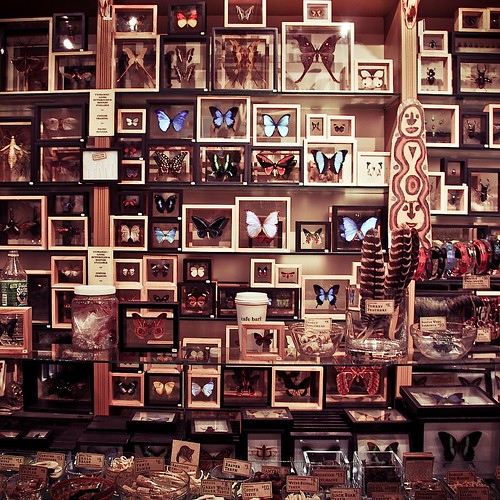
Cuba Gallery: New York / shop / nature / butterfly / background texture / interior / amazing / vintage / photography by ►CubaGallery


Photo Credit: celtics baby clothes


Winthrop University, Rock Hill, SC, student photographer Chris Osborne hopes his experience in sports photography will take him to the next level - his goal for every shot is "Sports Illustrated Cover".

Osborne explains how a sixth sense is valuable in sports photography, but without the basics of photography, you will still miss the shot.

What first attracted you to photography? How did you get started yourself?

Photography was something I could do since I have always been able to see how I wanted things to look. I have started and restarted a few times. My first camera was a 110 mm back in 3rd grade. I moved onto other interests until college, where I got a Coolpix L3. It is good for general use, but trying to shoot basketball did not work at all. So, I purchased a Rebel XT and have not looked back.

What photographers - well known or unknown - inspire you?

Beyond the sports photography culture, two unknowns got me where I am today. The first is my sister. She says that I stole her interest in photography and will not hold back any criticism of my work. The second is Paul, a fellow photographer at the school paper. After seeing one of his pictures in the paper and not liking it at all, I decided that I could do a better job and filled the other sports photographer position. Only later did I learn that an editor and not Paul made the cropping decisions.

What equipment do you use? Is there a certain piece of gear you could not live without?

I am currently using a Canon Rebel XT with the kit 18-55mm lens, Canon 50mm 1.8, Canon 75-300 4-5.6, and a Tamron 28-200mm 4/5.6. My only other add ons are a Canon battery grip and a polarizing filter. Being on a college student budget, I do not buy new equipment unless I will really use it. But if I had to pick one item that I couldn't live without it would be the battery grip. I missed too many shots by flipping the camera the wrong way to shoot vertically or simply missing the shutter button.

Do you have any goals in mind with your photography?

For my sports shot, there is always one basic thought running through my mind - Sports Illustrated cover. I would love to have one someday. For everything else, I think about if I could see the shot hanging on someone's wall. If I cannot, I find something that fits that requirement.

What do you feel are your strengths and weaknesses in sports photography?

As much as I hate to say this one, one of my strengths is that I have a camera that can handle the speed and lighting at college sporting events. Beyond that, I am able to have a personal relationship with most of the athletes and am able to predict fairly well what is about to happen. My weaknesses are that I am still too slow at times to get the shot that I want, despite knowing almost exactly what is about to happen and that I have a tendency to tilt my camera. Also, where the Winthrop athletic department lets me go during games limits what I am able to shoot.

What does it take to be a quality sports photographer?

To be a quality sports photographer, you have to be a little bit psychic. By that I mean that you need to be able to know where to point the camera to get the shot. Some sports are easier than others. What sports do you like to shoot? I like to shoot basketball and volleyball most. They are high intensity and usually have something new to get every time. I like baseball the least because most of the shots are just excessively similar.

What post-processing tools/software do you use? How much does that influence your photography?

When I want better control over the photograph, I will use Photoshop 7 or Gimp depending on which operating system I am working under (desktop runs XP while laptop is in the process of switching over to Linux). I use Picasa for basic editing such as cropping and overall brightness/contrast. I sacrifice the overall control for speed when I have to turn things in to the school paper.

What advice would you give new photographers?

A) Don't get discouraged. Photography is an art, which means you will have to work at it.
B) A good photographer can overcome bad equipment, and good equipment will not make you a good photographer.
C) Less time editing your photographs means you'll have more time to take more, so get things right in camera as much as possible.
D) Try to see all of what there is to shoot, not just the stereotypical snapshots that everyone else will find.

Check out Osborne's photography at http://sapidexistence.com

Six Tips to Help You Clean and Organize Your Photography Studio


sport photography kit (unpacked) by tychay


photo source


1. Photography Studio Organization - Use good old fashion hanging files.

Believe it or not, in this digital age, the classic green hanging folder is still a great organization tool. Using manila folders to organize your photography studio's bills, invoices, and receipts is a good start. It is a lost cause however, if you don't have an organized place to put them. The hanging folder is the perfect place to put them

Don't have a filing cabinet to put the hanging folders in? Not a problem. There are several options available at your local retail store. I prefer the clear Rubbermaid bins. They are about 8 inches wide. This means they are easily stored in closets or on a bookshelf. Since photography studio space is usually valuable real estate, these smaller file boxes might be the way to go.

2. Photography Studio Organization - File your files

A great way to keep your files organized is to keep a file of all your files. What do I mean by this? Keep a piece of paper in your photography studio with all of your file folders on with their names. If the folders have sub-folders, list those too.

This will let you see if you have folders that overlap so that you can condense your folders. For example, there is no point in having studio file and a studio equipment file.

You could have this list written on a piece of paper, but that would just be one more piece of paper to file. Try keeping this record in a word or excel document. That way you have one less piece of paper in your office and you can update it much easier when you add new folders and files.

3. Photography Studio Organization - Throw things away

For some reason most photography studio owners have a fear of throwing client paperwork and photos away. There are certain things that you just don't need to hang on to. If you are a digital photographer there is no reason to hold on to basic prints. Create a varity of back-ups and toss the prints. You can always re-print them. If you aren't a digital photographer and have a traditional photography studio, invest in a scanner. This way, if you must hold on to prints for color purposes, you can scan them and toss the print.

There are some things you need to hold onto though.

Tax items are one thing you should hold onto. You should save your tax returns forever. The rest of your tax reports and receipts should be saved for no longer than six years.

Throw away papers that you don't have an immediate need for, can get a copy of easy, or that don't have any tax or legal reason to hold on to.

If you feel like you need to hold on to all your photography studios paperwork, than try scanning it all onto a portable hard drive. Then you can throw all the papers away. It will take more time than growing through all the papers away, but at least the hard drive will take up less space in your office.

You can scan model's head shots for reference later. You can scan pose ideas from magazines so you don't have clipping all over your photography studio.

4. Photography Studio Organization - "Assorted" Folders

How many other, assorted, or misc files do you have in your photography studio? You know, the folder that you put everything in that you just don't know where else to put it. That isn't organization. Odds are you can just throw it away altogether. A good rule of thumb is, if you haven't needed it or touched it in a year then toss it.

5. Photography Studio Organization - Get rid of business cards

There are so many ways to organize all your business cards, model head shots, and contact information. There are plenty of ways to get rid of it altogether as well. A simple approach is to take the business card or headshot and tape it or staple it the file folder it is associated with. At least then it is filed away instead of in a pile on your desk or in a drawer.

There are lots of gadgets out there made for scanning in business cards to your computer. If you are a digital photography studio, you probably already have a scanner, put it to good use. If you don't have the money for one of these than just take some time to enter the contact information into your electronic address book. Outlook has a great address book or you could even use your email clients address book. Anything is better than having them just laying around waiting to get lost.

6. Photography Studio Organization - Use the computer

Try using your photography studio's computer as much as possible. Use it to make your to-do lists, create address books, file documents, and more. The more you keep or put into your computer the less you have in your photography studio.

As I mentioned before, there are plenty of gadgets out there that can help you scan your files into the computer. Take advantage of them!

Saturday, February 26, 2011

Where to Find Great Black and White Photography Online


Cuba Gallery: Street photography by ►CubaGallery


credit,credit


Black and white photography looks great in any décor. You can find just about anything, in any size, to match just about any room. Plus, the neutral tones of black and white photography ensure that it will match just about any color scheme. Here are some of the best places on the web to purchase black and white photography.

AllPoster.com

AllPoster.com is a fantastic site for cheap artwork. Now, cheap doesn't mean poor quality - quite the contrary, in fact. You can find just about anything - traditional paintings, classical art, black and white photography, large posters of bands, musicians, movies and more. They also offer framing.

My Top Pick: "City Street Signs" by Nelson Figueredo - $24.99 (Price doesn't include shipping and handling, or optional framing.)

Why I Chose This Piece: I love New York, more importantly - I love Broadway. Of course, Broadway and West 34th Street is practically the center of the theatre district. It's a great way to bring a little bit of Broadway right into my own home.

The Wall Art Store

This online store has a lot of fantastic, very 'artsy' black and white photos. They offer free shipping and all of the photos come framed, they even offer a few different selections for matting and frames. However, prices can run you from $55 dollars and all the way up to $919. Ouch. However, the quality is very high - so you can be sure you're getting your money's worth.

My Top Pick: "Stonehenge Sunrise" by Matthew De Haven - $50.00 (Price does not include shipping, handling or frame.
Why I Chose This Piece: I love Stonehenge, it's a fascinating place. The fog adds to the mystery of the structure and it's a great piece to add to a global photography collection.

Artful Home

This website offers a lot of wonderful photographs, but the prices run fairly average. The bottom line photographs start at $110 dollars and run up to several thousand dollars - so this isn't the most budget friendly site. However, if you've got the extra cash lying around, it's a great option and chances are you'll spend similar amounts at local art studios, especially if you live in a metropolitan area.

My Top Pick: "Winter Trees I" through Phoenix Galleries - $299.00 (price includes free shipping as well as framing and matting.)

Why I Chose This Piece: This particular photograph would be great for my fiancé's office. He loves the look of trees in the winter, so this is a great piece for him.

AbsoluteArts.com

Absolute Arts caters to the United States, the UK, China and more - and their prices range anywhere from $10 to $1,000,000. With more than 2500 works of art, you'll be sure to find exactly what you're looking for with this website.

My Top Pick: "Merced River Ice" by Ron Gallmeier - $330, Small; $665, Medium; and $1000, Large.
Why I Chose This Piece: Again, this is another piece I know my fiancé would really appreciate. Plus, I love the look of the water, the snow and the trees - so it's something we would both really enjoy in any room of our home.

So whether you've got $10 or $10,000 - you'll be sure to find the ideal pieces of black and white photography to fit your home décor and personal tastes.

Tips for Breaking into Sports Photography


Edinburgh Photography, Double Yellow by John Gilchrist


credit


Winthrop University, Rock Hill, SC, student photographer Chris Osborne hopes his experience in sports photography will take him to the next level - his goal for every shot is "Sports Illustrated Cover".

Osborne explains how a sixth sense is valuable in sports photography, but without the basics of photography, you will still miss the shot.

What first attracted you to photography? How did you get started yourself?

Photography was something I could do since I have always been able to see how I wanted things to look. I have started and restarted a few times. My first camera was a 110 mm back in 3rd grade. I moved onto other interests until college, where I got a Coolpix L3. It is good for general use, but trying to shoot basketball did not work at all. So, I purchased a Rebel XT and have not looked back.

What photographers - well known or unknown - inspire you?

Beyond the sports photography culture, two unknowns got me where I am today. The first is my sister. She says that I stole her interest in photography and will not hold back any criticism of my work. The second is Paul, a fellow photographer at the school paper. After seeing one of his pictures in the paper and not liking it at all, I decided that I could do a better job and filled the other sports photographer position. Only later did I learn that an editor and not Paul made the cropping decisions.

What equipment do you use? Is there a certain piece of gear you could not live without?

I am currently using a Canon Rebel XT with the kit 18-55mm lens, Canon 50mm 1.8, Canon 75-300 4-5.6, and a Tamron 28-200mm 4/5.6. My only other add ons are a Canon battery grip and a polarizing filter. Being on a college student budget, I do not buy new equipment unless I will really use it. But if I had to pick one item that I couldn't live without it would be the battery grip. I missed too many shots by flipping the camera the wrong way to shoot vertically or simply missing the shutter button.

Do you have any goals in mind with your photography?

For my sports shot, there is always one basic thought running through my mind - Sports Illustrated cover. I would love to have one someday. For everything else, I think about if I could see the shot hanging on someone's wall. If I cannot, I find something that fits that requirement.

What do you feel are your strengths and weaknesses in sports photography?

As much as I hate to say this one, one of my strengths is that I have a camera that can handle the speed and lighting at college sporting events. Beyond that, I am able to have a personal relationship with most of the athletes and am able to predict fairly well what is about to happen. My weaknesses are that I am still too slow at times to get the shot that I want, despite knowing almost exactly what is about to happen and that I have a tendency to tilt my camera. Also, where the Winthrop athletic department lets me go during games limits what I am able to shoot.

What does it take to be a quality sports photographer?

To be a quality sports photographer, you have to be a little bit psychic. By that I mean that you need to be able to know where to point the camera to get the shot. Some sports are easier than others. What sports do you like to shoot? I like to shoot basketball and volleyball most. They are high intensity and usually have something new to get every time. I like baseball the least because most of the shots are just excessively similar.

What post-processing tools/software do you use? How much does that influence your photography?

When I want better control over the photograph, I will use Photoshop 7 or Gimp depending on which operating system I am working under (desktop runs XP while laptop is in the process of switching over to Linux). I use Picasa for basic editing such as cropping and overall brightness/contrast. I sacrifice the overall control for speed when I have to turn things in to the school paper.

What advice would you give new photographers?

A) Don't get discouraged. Photography is an art, which means you will have to work at it.
B) A good photographer can overcome bad equipment, and good equipment will not make you a good photographer.
C) Less time editing your photographs means you'll have more time to take more, so get things right in camera as much as possible.
D) Try to see all of what there is to shoot, not just the stereotypical snapshots that everyone else will find.

Check out Osborne's photography at http://sapidexistence.com